EXPERT GUIDE | Framers, gobos and zoom optics
Light does more than illuminate. When controlled with precision, it defines architecture, communicates identity, and guides attention. Three optical tools make this possible in professional lighting: gobos, framing systems, and zoom optics.
Together, they transform a spotlight into a highly adaptable design instrument.
Gobo projection: light as a graphic element
A gobo is a small optical insert placed between the light source and the lens system. The name originates from “GOes Before Optics.”
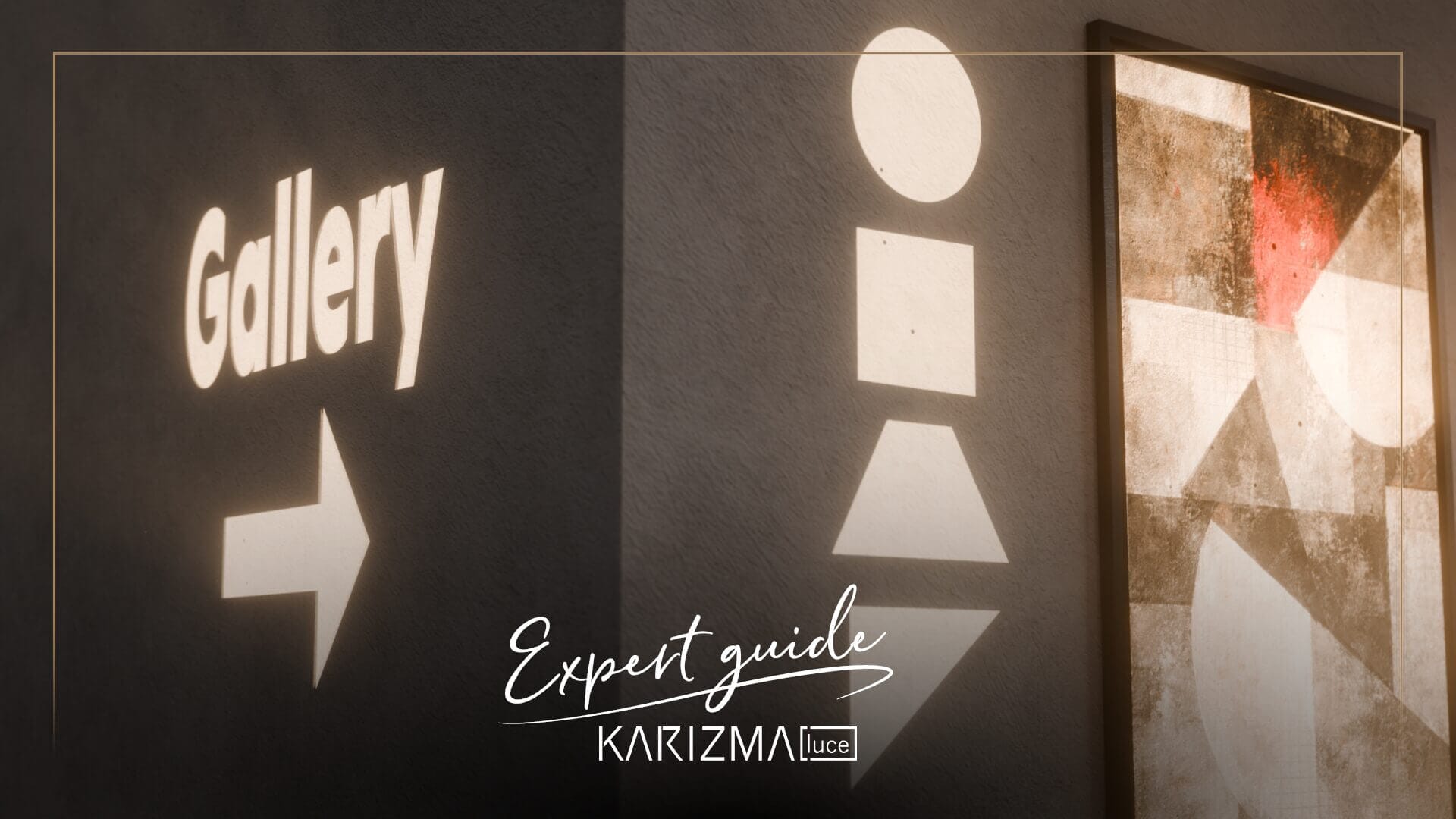
A gobo, made of metal or glass, contains a cutout or printed pattern. When light passes through it, the pattern is projected onto a surface within the beam path.
This technique allows designers to introduce:
Brand logos
Graphic textures
Wayfinding symbols
Decorative patterns
Visual storytelling elements
Rather than simply lighting a surface, gobo projection adds a communicative layer to the space. In retail, hospitality, galleries, or premium interiors, it becomes part of the architectural identity.
Framing system: defining the edge of light
While a gobo shapes what appears within the beam, a framing system defines where the beam ends.
A framing module uses adjustable blades, often four individually movable shutters, positioned within the optical path. By sliding and angling these blades, designers can create sharp, clean edges. The light can be cropped into squares, rectangles, or custom geometric shapes.
This control is essential when:
Highlighting artworks without spilling onto walls
Lighting displays with strict boundaries
Creating precise architectural accents
Preventing glare in controlled environments
Framing systems provide disciplined light. They allow illumination to follow architectural lines rather than fight them.
Zoom optics: adjusting the beam with flexibility
Zoom optics add another layer of control. Instead of selecting a fixed beam angle, designers can adjust the light spread within a defined range.
By modifying the distance between lens elements, the beam transitions smoothly from a narrow spot to a wider flood. This makes it possible to:
Adapt to changing layouts
Fine-tune focus on site
Adjust emphasis without replacing luminaires
Maintain consistency across varying ceiling heights
Zoom functionality is particularly valuable in dynamic environments such as retail stores, exhibitions, galleries, and hospitality projects where displays evolve over time.
A complete optical strategy
When combined, gobos, framing systems, and zoom optics offer a complete toolkit:
Gobos define the internal content of the beam
Framing defines the external boundary
Zoom defines the beam width and scale
Together, they allow lighting designers to control light with architectural precision and creative freedom.
The result is not simply illumination. It is intentional light; shaped, refined, and aligned with the identity of the space.
Karizma Luce Arte combines gobos, framing, and zoom optics into a single architectural luminaire. It allows designers to project patterns, define sharp beam edges, and adjust the beam angle with ease.
With an interchangeable gobo holder and integrated optical control, Arte transforms light into a precise and flexible design tool.
Discover Arte and shape light with intention.